Free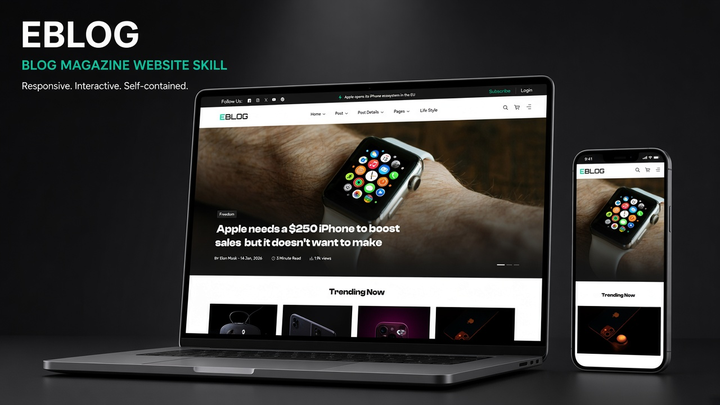
Typography is the interface
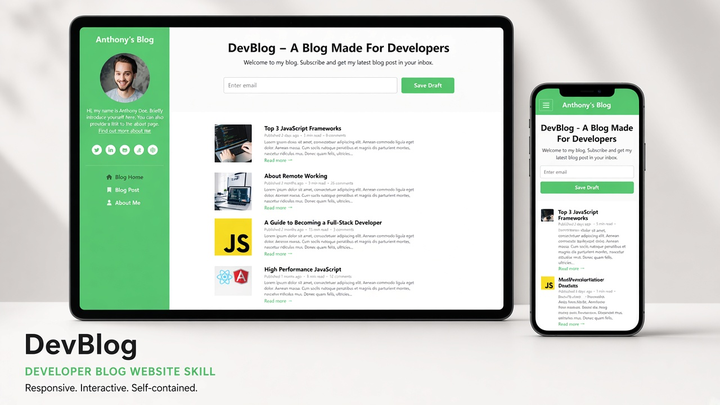
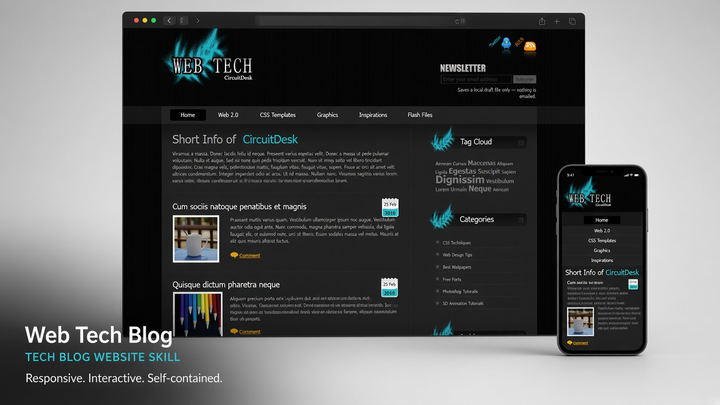
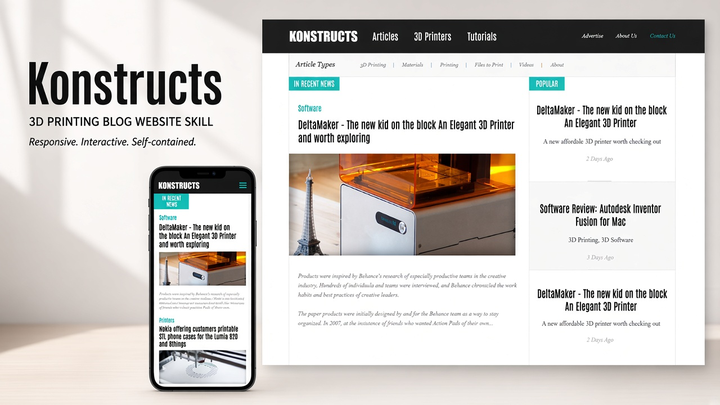
A blog succeeds or fails on the article page: line length, type size, and whether the next post is one obvious click away. These packs give your coding agent a content-site structure — article layouts, indexes and archives, author and about pages — with typography treated as the interface, so you can brief it with real posts instead of lorem ipsum.
Last updated 2026-11-07
From the live Skillux catalog
6 matching skills. Check each listing for its contents and license.
Put the skill to work
Covers and homepages are easy to make pretty; the article page is where readers live. Open each pack's preview at a long post and check the reading measure, heading rhythm, and how images, quotes, and code sit inside the text. A blog pack that only demos short posts will fight your archive.
Visitors should be able to browse by topic, follow a series in order, and find your best older posts. Prefer packs with deliberate index, category, and archive structures, and brief the agent with your actual topic list so navigation reflects what you publish, not a demo's categories.
About and author pages do quiet conversion work for a blog: who writes this, why they are worth reading, and how to follow them. Use the pack's structure with your real bio and photo, and keep subscription and contact routes consistent across the article page, index, and about page.
Newsletter capture, related posts, and sharing belong at the natural breaks — the end of an article, the end of an index — not layered over the text. Brief the agent to place growth elements where the pack puts them and to test the article page on a phone, where interruptions cost the most readers.
Browse the selection below and open the listings whose article and index pages fit your kind of publication. Check the supported agent, the stack, and whether the pack includes templates or guidance only.
Follow the installation guide for your agent, then gather three representative posts — your longest, one with images or code, and your most-read — plus your topic list and bio. Real content exposes layout problems that placeholders hide.
Ask the agent to build the article page and index with your test posts. Read a full post on a phone, follow the archive navigation, and only then extend the design to the remaining page types.
A landing page pack is built around one offer and one action. A blog pack is built around repeated reading: article typography, indexes and archives, topic navigation, and author trust. If you publish regularly, the blog structure serves you better; many sites use a blog pack for the publication and a landing layout for a single campaign page.
That depends on the pack's index and archive patterns, so judge the preview by navigation rather than by the homepage. Brief the agent with your real topic list and approximate post count, and test with enough posts to see pagination or grouping behavior before migrating everything.
A pack improves the reading experience and page structure — clear headings, readable typography, sensible internal navigation — which are the parts of a site you control through design. Rankings also depend on your content and authority, which no design pack supplies. Treat the skill as the presentation layer, not an SEO guarantee.
Yes, as a redesign project: install the pack, brief the agent with your existing posts and topics, and rebuild page types in order — article, index, about — checking each against real content. Your posts themselves carry over as content; what changes is the layout system presenting them. Verify links and redirects in your own setup before switching over.