Free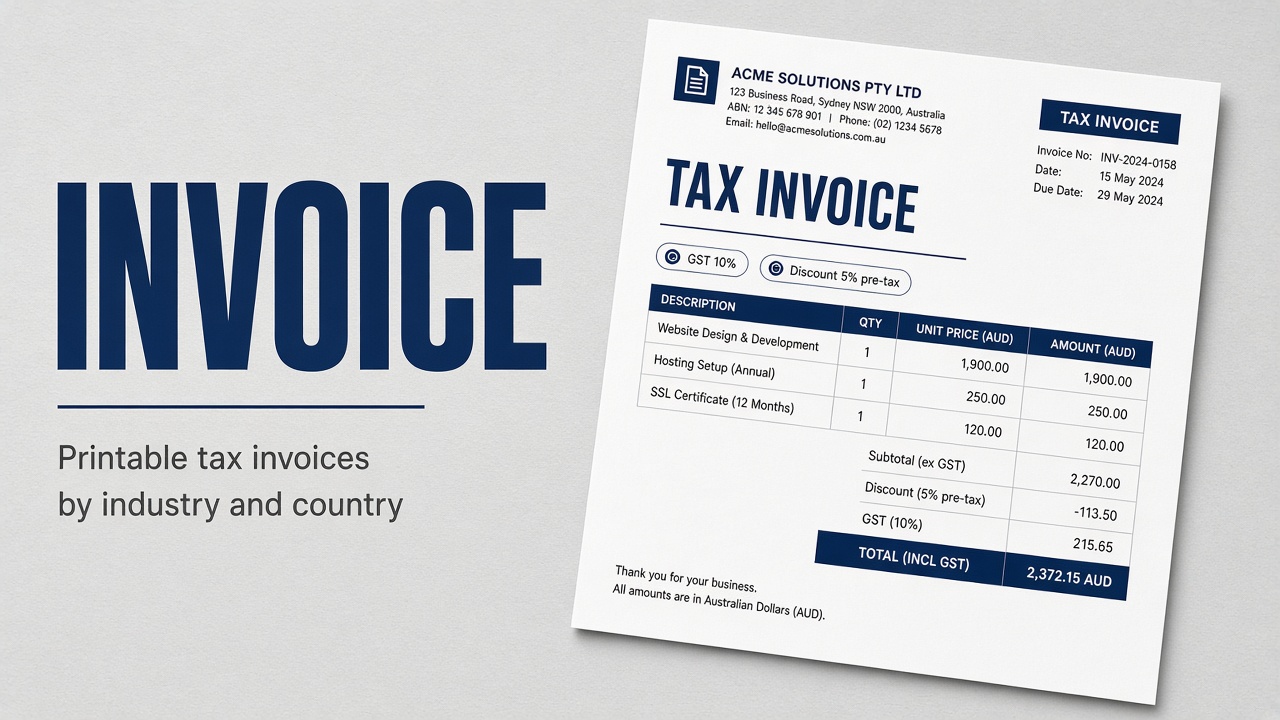
The formula, the example, and the wording
This page is the calculator, in the form you can check: a late fee is the unpaid balance multiplied by the rate for the period, multiplied by how many periods the payment is late. Everything below works that formula through with real numbers, compares it with flat fees, and shows how to write the term on the invoice so the charge is agreed before it is ever applied. When you need the invoice document itself — with the due date and terms printed on it — the free Skillux Invoice skill generates it in Claude, Cursor, or Codex.
Last updated 2026-11-07
From the live Skillux catalog
1 matching skill. Check each listing for its contents and license.
Put the skill to work
Take the unpaid balance, multiply by the monthly late-fee rate, then multiply by the number of months (or part months, per your terms) overdue. Example: a $2,000 invoice at 1.5% per month, paid 45 days late. One month of fee is $2,000 × 1.5% = $30. Forty-five days is 1.5 months, so the fee is $30 × 1.5 = $45, and the amount owed is $2,045. For a daily view, divide the monthly rate by 30: the same invoice accrues about $1 per day.
A monthly rate of 1% is 12% per year; 1.5% per month is 18% per year. If your agreement states an annual rate instead, divide by 12 to get the monthly figure before applying the formula — 18% per year on $2,000 is the same $30 per month. Mixing the two bases is the most common late-fee arithmetic error, and it always seems to be discovered by the client's accounts team, not yours.
A percentage fee scales with the balance and with time, which makes it proportionate on both a $300 invoice and a $30,000 one. A flat fee (for example $25 per late notice) is simpler to administer but is trivial on large balances and heavy on small ones. Some terms combine them: a modest flat administration fee plus a monthly percentage. Whichever you choose, the amount a client owes should be computable from the invoice and the terms alone — if it needs your explanation, it will be disputed.
The calculation is the easy part; enforceability is the real constraint. A late fee introduced for the first time on an already-overdue invoice has no agreement behind it. State the rate, the grace period if any, and when accrual starts in your proposal or engagement terms, and repeat the due date and terms on the invoice itself. The Invoice skill takes the due date and payment terms in your brief and prints them on the generated document, and it will not invent rates or terms you have not confirmed. This page is general information about the arithmetic and wording, not legal advice — caps and rules for late fees vary by place and by whether your client is a business or a consumer.
Put the due period (Net 14, Net 30), the late-fee rate or flat amount, any grace period, and the accrual start in the document the client accepts — a proposal or engagement letter. The Proposal skill's sample terms are one place to carry this wording into a client-facing document.
Generate the invoice with the free Invoice skill from the hub page, with the due date and the agreed late-fee line in the brief. An invoice that shows only a total invites the client to choose their own payment date.
Work the formula on the unpaid balance, state the fee as its own line with the rate and the overdue period shown, and reference the original invoice number and terms. Clear arithmetic and a paper trail settle most disputes before they become write-offs.
Multiply the unpaid balance by the periodic rate, then by the number of periods overdue. At 1.5% per month, a $2,000 invoice accrues $30 for the first month and roughly $1 per day after that; 45 days late is a $45 fee. If your rate is quoted annually, divide it by 12 first to get the monthly rate.
A commonly used figure for business invoices is 1% to 1.5% per month on the overdue balance (12–18% per year), sometimes paired with a small flat administration fee. There is no universal standard, and some jurisdictions cap what can be charged or regulate fees for consumer clients — agree a rate in your terms and check the rules that apply to your situation.
From the day after the due date, unless your terms grant a grace period — a stated number of days after the due date before the fee applies. Whichever you use, the due date and the accrual start should both be visible on the invoice so the client can verify the calculation themselves.
You can calculate one, but collecting it is another matter: a fee the client never agreed to is easy to refuse and hard to enforce. The reliable sequence is terms agreed in the proposal or contract, the due date and fee printed on the invoice, then the fee applied if payment runs past the date. For invoices already outstanding without agreed terms, a prompt-payment discount on the next engagement usually recovers more goodwill than a retroactive charge.