Free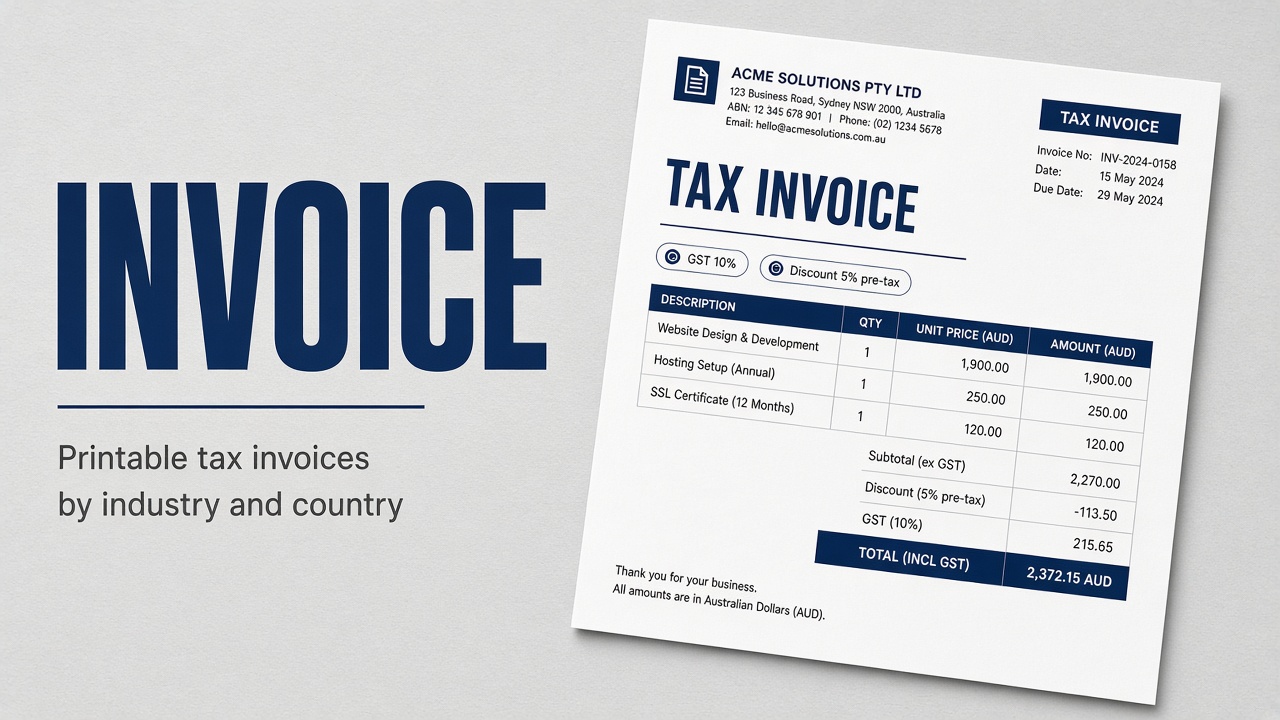
The due date is the payment plan
Payment terms are the part of the invoice that decides when the money arrives — and the part most often left vague. Net 30 is a promise about a date, not a suggestion: it says the full amount is due thirty days after the invoice date. This page works through the terms freelancers and small studios actually use — Net 30, Net 14, due on receipt, deposits, and early-payment discounts — with the arithmetic shown, and explains how to write terms on the invoice so the client can follow them without asking. When you need the document itself, the free Skillux Invoice skill prints the due date and the agreed terms on the invoice in Claude, Cursor, or Codex.
Last updated 2026-11-07
From the live Skillux catalog
1 matching skill. Check each listing for its contents and license.
Put the skill to work
Net 30 means the full amount is due 30 calendar days after the invoice date — not 30 business days, and not 30 days after the client gets around to reading it. An invoice issued on 23 November with Net 30 is due on 23 December. Net 14 and Net 7 work the same way, and due on receipt means the amount is payable as soon as the invoice is received. Put the due date itself on the document, not just the term: a client who has to count days from the issue date is a client with a reason to pay late.
A common offer is 2/10 Net 30: a 2% discount if the client pays within 10 days, otherwise the full amount by day 30. On a $2,000 invoice, paying inside the window costs $1,960 — the client saves $40 and you get paid three weeks early. The discount only works when the invoice states both dates: the discount deadline and the final due date. A discount that costs you more than the faster cash is worth is not generosity, it is a pricing decision — decide it before the invoice, not while chasing the payment.
For project work, the payment terms are agreed when the work is agreed, not when the invoice is written: a deposit before work starts, stage payments on completion, and the balance on delivery. The proposal or engagement letter carries those terms; the invoice repeats them with the dates. The companion contractor invoice guide shows how deposits, stage amounts, and retention are carried as visible lines on the invoice itself, so the balance due is always the true remaining amount.
A late fee or a discount the client never agreed to is easy to refuse. State the payment period, the due date, the early-payment discount if any, and the late-fee rate in the proposal or engagement terms, then print the due date and the terms on every invoice. The Invoice skill takes the due date and payment terms from your brief and prints them on the generated document, and it will not invent terms you have not confirmed. This page is general information about wording and arithmetic, not legal advice — rules on late fees, interest, and consumer clients vary by place.
Put the payment period, the discount if any, the deposit or milestone schedule, and the late-fee rate in the document the client accepts. The Proposal skill's sample terms are one place to carry this wording into a client-facing document.
Generate the invoice with the free Invoice skill from the hub page, with the due date and the agreed terms in the brief. An invoice that shows only a total invites the client to choose their own payment date.
Reference the original invoice number, the due date, and the agreed terms; state the amount now due with the arithmetic shown. Clear terms and a paper trail settle most disputes before they become write-offs.
It means the full amount is due 30 calendar days after the invoice date. An invoice issued on 23 November with Net 30 is due on 23 December. Net 14 and Net 7 use the same rule with different periods, and due on receipt means payable when the invoice is received.
A 2% discount if the client pays within 10 days, otherwise the full amount is due within 30 days. On a $2,000 invoice, early payment costs $1,960. State both the discount deadline and the final due date on the invoice, or the client cannot use the offer.
Match the term to the work: due on receipt or Net 14 for small, fast jobs; Net 30 for larger engagements with business clients; a deposit before work and milestone payments for projects. Whatever you choose, agree it before the work starts and print the due date on the invoice.
Not unilaterally for that invoice: the terms the client accepted are the terms that apply. You can agree different terms for the next invoice, or negotiate a change with the client. This is also why the terms belong in the proposal or contract first — the invoice records what was agreed, it does not create the agreement.